

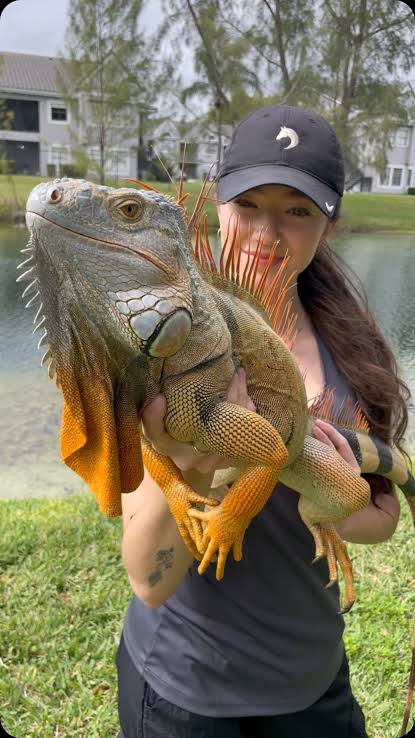
Image Credit – Kelsey
An Adult Iguana is a fascinating and majestic reptile that attracts reptile lovers with its prehistoric appearance and calm demeanor. However, caring for an adult iguana is very different from caring for a baby iguana. These reptiles grow large, require specialized care, and need committed owners who understand their long-term needs. In this guide, we’ll explore everything you need to know about adulthood iguanas, including their size, diet, habitat, behavior, and health care.
Adult Iguana: Complete Care Guide, Behavior, Diet, and Habitat
Understanding
An Iguana can grow up to 5–7 feet in length, including the tail, and can weigh between 4–8 kg. Green iguanas are the most common species kept as pets. At adulthood, iguanas become stronger, more territorial, and more sensitive to improper handling.
Unlike juveniles, iguanas demand more space and environmental control. Their intelligence and memory allow them to recognize owners, routines, and surroundings, making them rewarding pets for experienced reptile keepers.
Behavior and Temperament
The temperament of an iguana can range from calm and friendly to aggressive, depending on upbringing and handling. Regular, gentle interaction from a young age helps build trust. Adult males may become territorial, especially during breeding season.
Tail whipping, head bobbing, and dewlap extension are common behaviors used for communication or defense. Understanding these signals is essential for safe interaction with an iguana.
Ideal Habitat
A proper enclosure is crucial for an Iguana. Due to their size, standard reptile tanks are not suitable. Most adult iguanas require a custom-built enclosure or an entire room adapted for reptile care.
Key habitat requirements include:
- Vertical space for climbing
- Strong branches and shelves
- Temperature gradient (26–35°C)
- UVB lighting for calcium absorption
- Humidity levels between 65–80%
Without these condition ,iguanas can develop serious health problems such as metabolic bone disease.
Diet and Nutrition
An Iguana is strictly herbivorous. A proper diet supports longevity, bone strength, and immune health.
A healthy Iguana diet includes:
- Dark leafy greens (collard greens, mustard greens)
- Vegetables (squash, green beans, bell peppers)
- Limited fruits (mango, papaya, berries)
Avoid animal protein, dairy, and processed foods, as these can damage the kidneys. Fresh water should always be available, and misting helps with hydration.
Health Care
Regular veterinary checkups are essential for an Adult Iguana. Common health concerns include:
- Metabolic bone disease
- Respiratory infections
- Parasites
- Dehydration
Signs of illness may include lethargy, appetite loss, swollen joints, or abnormal stool. Early detection significantly improves recovery outcomes.
Owning an adult iguana requires time, space, patience, and financial commitment. They can live 15–20 years or more with proper care. While not ideal for beginners, experienced reptile owners often find adult iguanas deeply rewarding companions.
An Adult Iguana is a remarkable reptile that thrives when provided with the right environment, diet, and care. Understanding their behavior, nutritional needs, and space requirements is key to ensuring a healthy and stress-free life for your iguana. With dedication and knowledge, adult iguanas can become calm, impressive, and long-term companions.
Let us know in the comments if you have experience caring for an adult iguana or if you’re planning to adopt one!
Frequently Asked Questions
How big does an adult iguana get?
An iguana can grow up to 5–7 feet long and weigh 4–8 kg, depending on species and care.
Are adult iguanas good pets for beginners?
Adult iguanas are better suited for experienced reptile owners due to their size, strength, and care requirements.
What should an adult iguana eat daily?
An adult iguana should eat leafy greens like collard and mustard greens, fresh vegetables such as squash and bell peppers, limited fruits, and always have access to fresh water daily.